Why can’t I sleep in a new place? Understanding the first-night effect
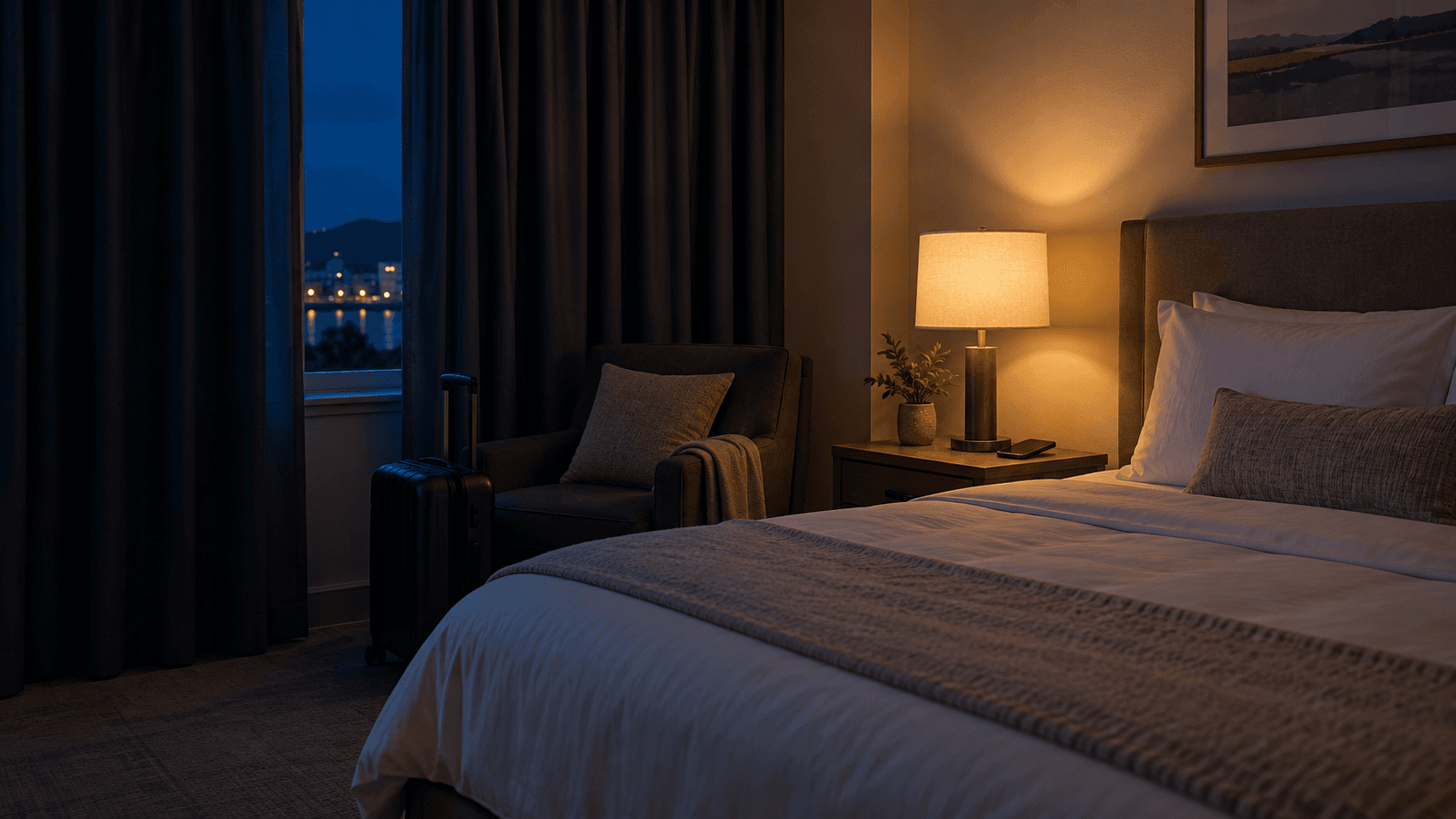
The first night in a hotel, guest room, or unfamiliar bed can feel different from sleeping at home. A hallway door closes. The air conditioner clicks on. Even the dark looks unfamiliar. If you lie awake longer than usual, it does not mean you have failed at travel or that something is wrong with you.
What researchers mean by the “first-night effect”
Sleep researchers use first-night effect for differences they observe when someone sleeps in a new research setting for the first time. In one small laboratory study, researchers recorded sleep from 35 healthy young adults over two sessions and found that some brain activity and responses to unusual sounds differed on the first session. The study explored one possible explanation for unsettled sleep in unfamiliar surroundings; it does not show that every traveler experiences the same effect or that half the brain stays awake.
A hotel night also includes everyday factors a laboratory experiment cannot explain on its own: a late flight, a new mattress, light through the curtains, noise from the corridor, or a bedtime that shifted by several hours. The useful takeaway is simple: a new place can take time to feel familiar. You do not have to force sleep or diagnose the reason at 2 a.m.
Make the room easier to settle into
The U.S. Centers for Disease Control and Prevention recommends setting up a quiet, dark, comfortable, and cool hotel room when sleeping away from home. You can try a few small changes when they are available:
- Close the curtains fully; use an eye mask if light still comes through.
- Use earplugs for ordinary hallway or street noise if they are comfortable for you.
- Adjust the room temperature and bedding to what feels comfortable.
- Silence nonessential phone alerts, but keep alarms and calls you rely on audible.
- If a noise is persistent, ask the front desk whether a quieter room is available.
Bring one familiar bedtime cue
A full home routine may not fit in a suitcase, but one or two familiar details can make the evening feel less abrupt. Pack comfortable sleepwear, follow the same short wash-up routine, or read a few pages of a familiar book. If you normally listen to a calm story or sound, you can use it as a cue to wind down. Keep audio low enough that it does not compete with the room, and choose a timer if you only want it while settling. Sound is optional; quiet is fine too.
If you wake during the night
Try not to turn the clock into a countdown. Keep the room dim, leave your phone face down, and give yourself a few quiet minutes. If you feel more alert than sleepy, a calm, low-light activity can be easier than staying in bed frustrated. Return when you feel ready. One imperfect night is a night, not a verdict on the rest of the trip.
Crossing time zones can affect your sleep schedule separately from being in a new room. If your trip spans time zones, the CDC’s travel and jet lag guidance has additional steps. If sleep problems continue after you return home or are affecting your daily life, consider asking a health professional for advice.
A simple first-night routine
- Unpack what you need for the morning and set the alarms you rely on.
- Make the room as dark, quiet, and comfortable as you reasonably can.
- Repeat one small cue from home, such as reading or a familiar sound.
- Let the night be imperfect without checking how many hours remain.
If outside noise is the hardest part of your room, our guide to sleeping in a noisy apartment covers practical ways to make unwanted sound less prominent.
Sources
- Tamaki et al., “Night Watch in One Brain Hemisphere during Sleep Associated with the First-Night Effect in Humans,” Current Biology (2016)
- CDC/NIOSH: Aircrew and Jet Lag
Common questions
What is the first-night effect?
It is a name sleep researchers use for differences in sleep observed on a first night in an unfamiliar sleep-study setting. A small laboratory study found changes in brain activity and response to unusual sounds on the first session compared with later sessions. It is not a diagnosis, and it does not explain every restless night away from home.
Is it normal to sleep badly in a hotel?
It is common to find a new room less comfortable than home. Light, noise, temperature, travel timing, and a changed routine can all affect how settled you feel. One difficult night by itself does not mean something is wrong.
What can I bring to help me sleep away from home?
Consider packing earplugs or an eye mask, comfortable sleepwear, and one small familiar item from your routine. If you use audio, keep it low, make sure you can hear important alarms, and choose a timer if you do not need it all night.
Can sleep sounds stop the first-night effect?
There is no guarantee that sound will change how you sleep in a new place. Some people prefer quiet; others find a soft, steady background sound less distracting. Keep the volume modest and treat audio as an optional part of a bedtime routine, not a treatment.
Make room for a softer wind-down
DreamTide is a small, sleep-first app: slow stories, gentle wind-downs, and a layered sound mixer, narrated in soft, real voices, with timers that fade to silence once you’re asleep. 32 soundscapes and stories are free to use without subscribing. A 7-day introductory offer may be available to eligible new subscribers; the offer shown in your app store before purchase controls.