How to sleep on an overnight flight (and adjust after landing)
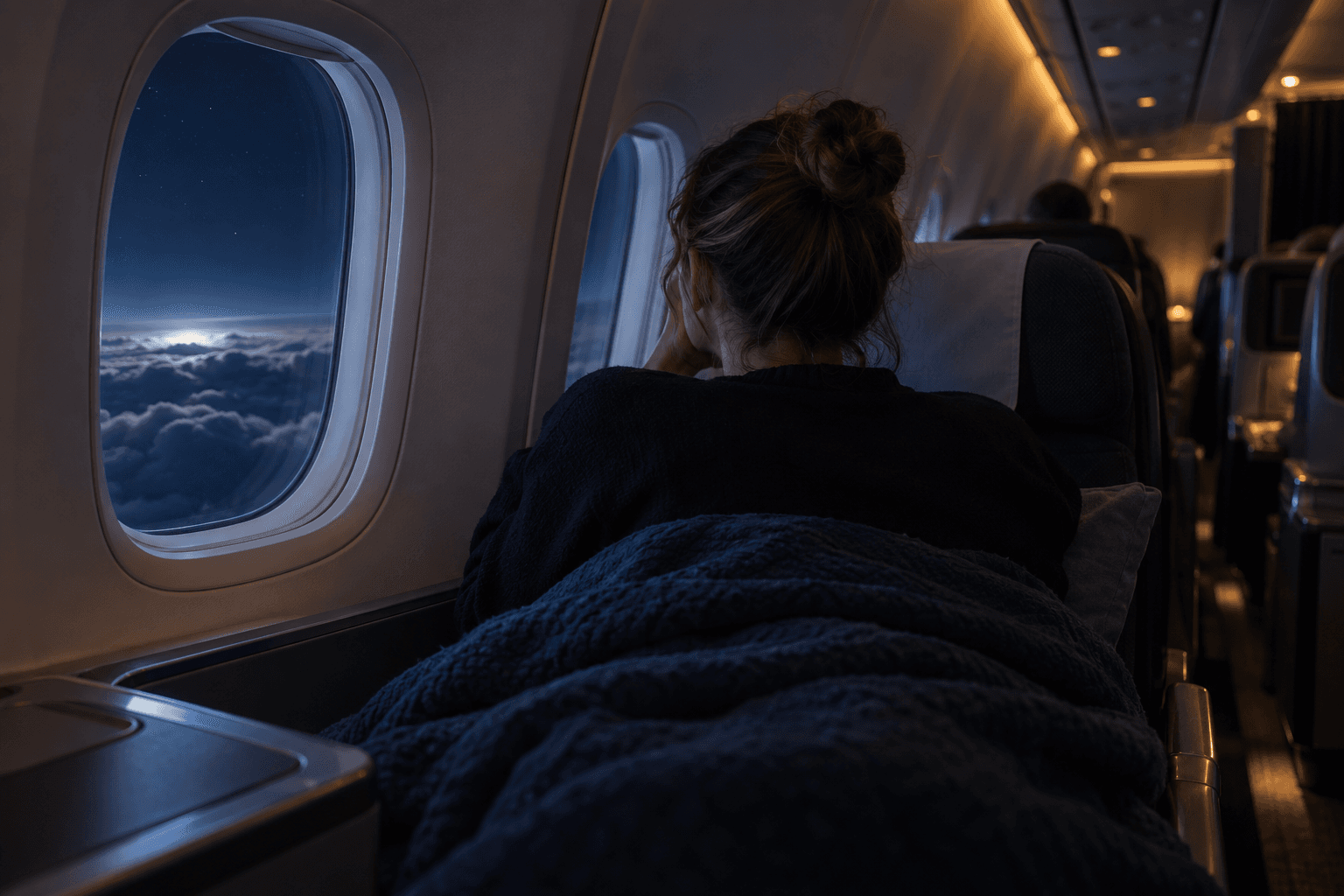
An overnight flight asks your body to do something awkward: rest in a bright, narrow, unfamiliar seat while the clock may be telling you it is daytime. The goal does not have to be a perfect eight hours. A calmer setup and a little planning can make the trip easier, even if sleep comes in short stretches.
Give the flight a simple plan
Before boarding, check the local time at your destination. If it will be night there during the flight, use that stretch as your chance to sleep. If it will be daytime, try to stay gently occupied instead of forcing sleep. Shifting your routine toward the destination before travel can also help when the time difference is large.
Once you are settled, keep the setup uncomplicated: a comfortable layer, water within reach, and an eye mask or earplugs if they make the cabin easier to ignore. A small pillow or rolled jacket can support your neck. Settle your seat and belongings before you try to rest, so you are not repeatedly searching the overhead bin or checking your phone.
Make a quieter pocket
Cabin noise and announcements are part of flying, so aim for less stimulation, not perfect silence. Earplugs, headphones, or a low, steady sound can soften the background. Pick something familiar and turn it down so it stays comfortable. A gentle rain sound or a slow sleep story can give your attention somewhere easy to rest. Keep your device dim and avoid a bright screen when you are trying to sleep.
If sleep does not arrive, there is no need to turn the seat into a test you are failing. Close your eyes, loosen your jaw and shoulders, and let the body rest. A few quiet periods can make the journey feel less draining even when the cabin is not a place where you sleep well.
Use light and naps thoughtfully
Light is one of the cues that helps set the body clock, but the useful timing changes with travel direction and itinerary. The CDC recommends aligning sleep, meals, and light with destination time when possible; its jet lag guidance explains why a universal light schedule is not right for every trip. On arrival, get outside during local daytime when practical. If you need a nap, keep it short enough that you can still sleep at the local bedtime.
Drink water regularly and go easy on alcohol, which can make sleep less restorative and leave you feeling worse after flying. Avoid trying an unfamiliar sleep aid in the air. For specific advice about medicines or supplements, check with a healthcare professional before the trip.
Let the first day be gentle
After landing, move toward the local schedule in manageable steps: daylight during the day, meals near local meal times, and a normal local bedtime if you can manage it. Avoid a long late-day nap that leaves you wide awake at night. You may need a couple of days to feel settled, especially after crossing several time zones, so leave room for a slower start when your plans allow.
If a familiar sound helps you wind down, DreamTide’s sleep stories and steady soundscapes are available for bedtime at home before a trip or after you arrive. DreamTide does not support offline listening yet, so do not rely on it during a flight without a dependable in-flight Wi-Fi connection. If you want audio in airplane mode, choose a service that supports downloads and confirm the audio plays offline before you leave.
Travel guidance: U.S. Centers for Disease Control and Prevention, Jet Lag Disorder, CDC Yellow Book. General information only; personal medical questions should go to a qualified clinician.
Common questions
How can I sleep on a plane if I have trouble sleeping sitting up?
Make the space as predictable and comfortable as you can: settle in after boarding, support your head and lower back, use an eye mask or earplugs if they help, and choose a familiar, quiet audio track at a low volume. You may only doze rather than sleep deeply, and that still counts as rest.
Should I try to sleep according to my destination's time?
For a meaningful time-zone change, the CDC advises timing sleep, meals, and light around the destination when practical. Start by checking the local time before you board and using the flight for the part of the day when you would normally sleep there. Light timing depends on travel direction and schedule, so follow destination-specific guidance rather than using bright light at random.
What should I do after landing if I barely slept?
Get oriented to local time, drink water, and try to spend some time outdoors in daylight if it is daytime there. Keep any nap brief so it does not take over the local night, and give yourself a quieter first evening where possible. Recovery is gradual; one difficult flight does not mean the whole trip will be sleepless.
Should I take melatonin or a sleep medicine before a flight?
This article cannot recommend a medicine or supplement for you. Timing, health conditions, other medicines, and flight safety can matter; ask a clinician or pharmacist who knows your situation before using one for travel.
Make room for a softer wind-down
DreamTide is a small, sleep-first app: slow stories, gentle wind-downs, and a layered sound mixer, narrated in soft, real voices, with timers that fade to silence once you’re asleep. 32 soundscapes and stories are free to use without subscribing. A 7-day introductory offer may be available to eligible new subscribers; the offer shown in your app store before purchase controls.