Sleep stories for adults: why being read to sleep works
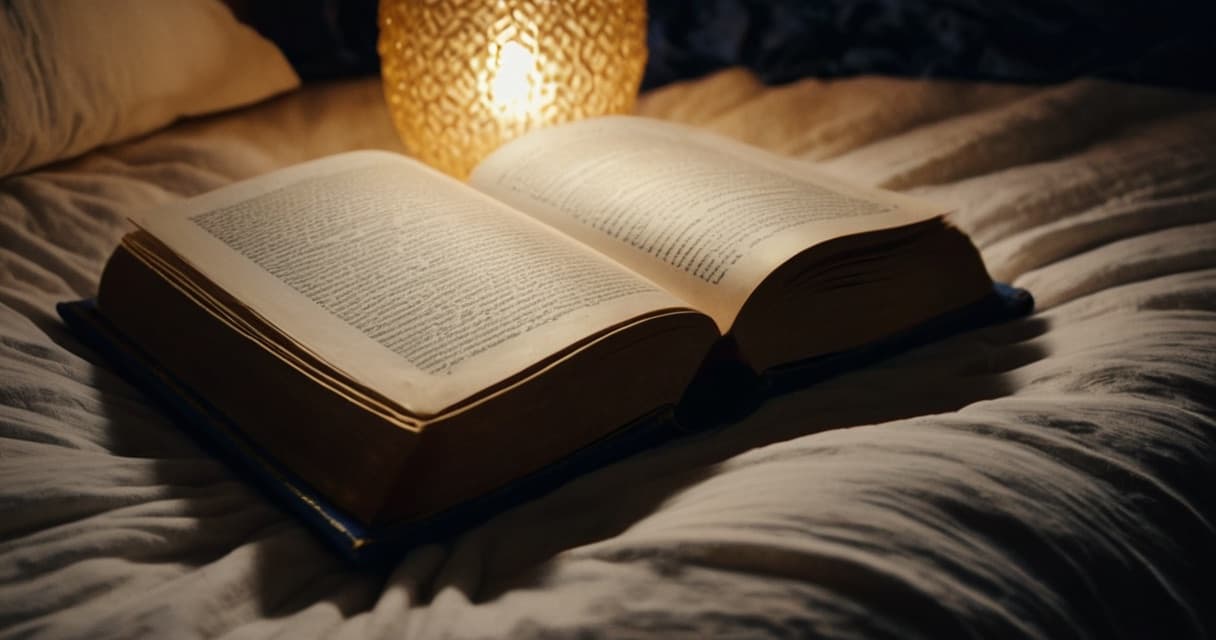
Somewhere along the way we decided that being read to sleep belongs to childhood, like training wheels. It is a strange thing to have given up. A calm voice telling a slow story is one of the oldest sleep aids humans have, and it works on adults for the same reason it worked on you at five.
The problem with silence
For a certain kind of mind, and you likely know if you have one, a silent bedroom is not restful. It is an open microphone. The moment the lights go out, the planning starts: the email you should have sent, the conversation from 2014, the vague dread about Thursday. Attention does not like a vacuum, and at night the only material available is you.
This is why “just clear your mind” is useless advice. Attention cannot be switched off, only redirected. What a racing mind needs is not silence but something better to hold: interesting enough to occupy attention, boring enough not to sustain it.
Why a story works
A slow story is almost perfectly shaped for the job. Following a gentle narrative takes just enough cognitive effort to crowd out rumination, the way a hand on the handrail steadies you on dark stairs. Unlike your own thoughts, the story asks nothing of you: no decisions, no stakes, no self. And unlike music, it has a thread, somewhere for attention to walk.
There is an older layer too. Most of us were read to before we could read, during years when a parent’s voice at bedtime meant the day was over and someone else was keeping watch. That association does not expire. A calm voice, low and unhurried, is a signal of safety, and safety is the actual precondition for sleep. The body does not release its grip on wakefulness until some part of it believes nothing needs guarding.
What makes a sleep story a sleep story
It is tempting to just put on an audiobook, and if that works for you, keep going. But audiobooks are written to keep you awake. Novels run on tension; narrators are performers; chapters end on hooks, because the author wants you to stay. A story written for sleep is built on opposite principles:
- Low stakes. Nothing bad happens. Nothing urgent happens. Ideally, very little happens at all, and it happens slowly.
- Descriptive dwelling. Long, warm passages about the light through a train window or the shelves of an old shop. Places, not plots.
- A narrator who is not performing. Soft, even pacing, pitched low, closer to being talked to than being entertained.
- Endings that do not matter. A good sleep story is written to be left unfinished. There is no twist waiting to punish you for drifting off.
How to listen well
Set a sleep timer, ideally one that fades rather than cuts, so the story does not play into the hours when you need quiet or, worse, stop abruptly and wake you. Keep the volume just above a whisper; if you can comfortably follow every word, it is loud enough. Put the phone face down and out of reach, with notifications silenced. And let repetition work for you: the same story, or the same narrator, night after night, stops being content and becomes a cue, the auditory equivalent of your own pillow.
Some people like a story alone. Others lay it over a soft bed of rain or brown noise, which smooths over house sounds and fills the silence after the voice fades.
Who tends to benefit most
Sleep stories are especially kind to overthinkers: people whose bodies are tired while their minds hold evening meetings. They help people who wake at 3am and need somewhere gentle to put their attention while sleep returns. And they help people who simply find silence loud, who grew up with a fan, a highway, a household, and never learned to sleep in a vacuum.
What a story will not fix
Honesty matters here. A sleep story is a tool, not a treatment. It will not resolve sleep apnea, chronic pain, or long-standing insomnia, and if your sleeplessness is persistent and hurting your days, the most useful thing you can do is talk to a doctor about CBT-I. A story can still sit alongside all of that. It just should not be asked to do the heavy lifting alone.
Choosing your first one
Pick a setting you would actually like to be in: a night train, a coastline, a quiet library, an old house in the rain. Then pick a voice you could listen to describe anything, because at these volumes the voice matters far more than the plot. If you drift off before anything happens, you chose well.
Common questions
Is it OK to fall asleep to audio every night?
Yes, for most people. A nightly story becomes part of the wind-down ritual, and rituals are exactly what sleep responds to. Use a timer or a fade so audio is not playing at full volume all night, and keep the level just above a whisper.
What is the difference between a sleep story and an audiobook?
Audiobooks are written and performed to hold your attention: tension, pacing, cliffhangers. Sleep stories are built to release it: slow narration, low stakes, long unhurried descriptions, and endings that are deliberately unimportant. An audiobook fights your drowsiness; a sleep story cooperates with it.
Should I use headphones or a speaker?
Whichever lets you lie comfortably. A phone or small speaker on the nightstand at low volume works well for most people. If you share a bed, a single soft earbud or a thin pillow speaker keeps the peace. Comfort matters more than audio quality at these volumes.
I never hear the ending. Am I doing it wrong?
You are doing it exactly right. A sleep story is a staircase, not a destination. Falling asleep ten minutes in is the intended outcome, and hearing the same first ten minutes every night only strengthens the cue.
If tonight is one of those nights
DreamTide is a small, sleep-first app: slow stories, gentle wind-downs, and a seamless sound mixer, narrated in soft, real voices, with timers that fade to silence once you’re asleep. 32 soundscapes and stories are free forever, no card, and Premium starts with 7 nights free.