Rain sounds for sleep: why they work and how to use them well
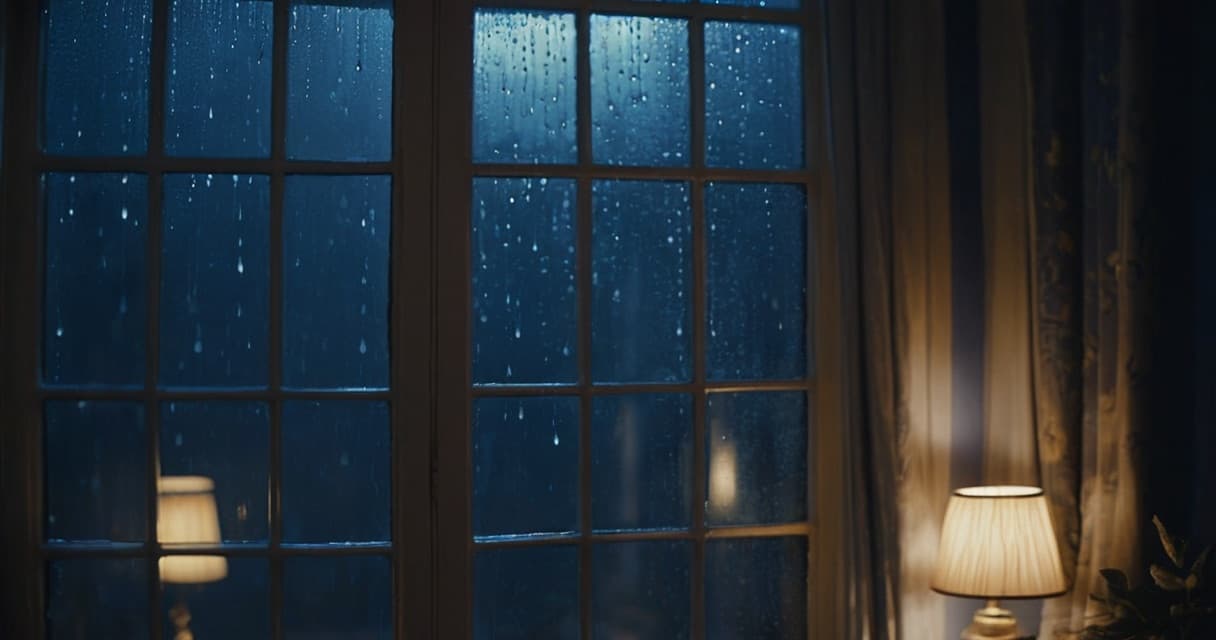
Long before apps, before recordings, before electricity, people slept well on rainy nights. Rain on a roof may be the oldest sleep sound there is, and the reasons it works are worth understanding, because they tell you exactly how to use it well.
It is not the noise. It is the change.
The first thing to understand about sleep and sound: what wakes you is rarely loudness. It is contrast. A door closing at 2am in a silent house is a small sound and a large change, and your sleeping brain, which never fully stops listening, treats change as information worth waking for.
Steady rain raises the floor. Against a soft, continuous wash of sound, the door, the pipes, the neighbor’s car are no longer spikes against silence; they are ripples on an already-moving surface. This is masking, and it is the main mechanical reason rain helps people stay asleep, especially light sleepers and anyone sleeping near a street.
Why rain in particular
Plenty of sounds can mask. Rain has three extra things going for it.
- Its texture. Rain is broadband noise, energy smeared across many frequencies, but tilted toward the low end, which puts it close to what engineers call pink noise: fuller and warmer than the flat hiss of white noise, without its sharp top edge.
- Its predictability. Rain varies just enough to sound alive without ever surprising you. Your brain stops monitoring what it can predict, and rain is prediction-friendly in a way few natural sounds are.
- Its meaning. For most of human history, rain meant you were indoors, sheltered, and excused from doing anything about anything. That association runs deep. Rain is not just sound; it is permission.
Rain, white, pink, brown: a short field guide
White noise spreads equal energy across all frequencies and can sound hissy, like an untuned radio. Pink noise shifts the balance downward and sounds softer; rain, wind, and surf are its natural cousins. Brown noise goes lower still, a deep rumble like a distant waterfall, and is particularly good at swallowing traffic and voices. The honest rule after all the theory: the best sleep sound is the one you stop noticing. Preference is not a tiebreaker here; it is the whole game.
How to set it up well
- Quieter than you think. The goal is to blur the edges of other sounds, not to overpower them. If it is loud enough to talk over with any effort, it is too loud. Masking works at surprisingly low levels.
- Seamless loops only. A loop with an audible seam or a gap is a change, and change is exactly what wakes you. If you catch yourself noticing the join, find a longer or better-made loop.
- All night or a slow fade. Both work. But if you reliably wake when the sound stops, stop using a hard cutoff: let it run, or use a timer that fades over minutes rather than ending mid-breath.
- Same sound, every night. Consistency turns rain from content into a cue. After a few weeks, the sound itself starts the descent, the way a familiar story or your own pillow does.
- Speaker over earbuds, usually. A device across the room at low volume is kinder to your ears and your sleep position. If you need earbuds for a partner’s sake, keep them soft and quiet.
If you need something to put on tonight, we keep a small set of free, full-length recordings on our YouTube channel: eight hours of steady rain and slow ocean, with black screen versions that keep the room dark. Here is one to start with, real rain on a window, recorded to run until morning.
Our guide to free sleep sounds on YouTube covers what else is there and how to set it up well.
Layering: making the rain yours
A single rain recording can feel thin, and every bedroom has its own noise profile to work against. This is where layering earns its keep: steady rain for the mid frequencies, a low bed of brown noise underneath to steady traffic rumble, perhaps very distant thunder, kept low and rolled soft, for depth. The key is separate control: each layer at its own volume, matched to your room, your ears, your night. That need is exactly why Dreamtide’s mixer gives every layer its own level and loops everything gaplessly, but however you do it, the principle is the same: build a floor, not a wall.
Kids, tinnitus, and other practicalities
For babies and small children, keep the machine or phone across the room and the volume moderate; a common guideline is around 50 dB at the child’s head, about the level of a quiet conversation. For adults with tinnitus, gentle broadband sound at night often softens the contrast that makes ringing intrusive; keep it just below the tinnitus itself rather than trying to drown it out. And if rain simply is not your sound, surf, wind, a fire, or a night train can do the same job. The recipe does not change: steady, safe, predictable, quiet.
If you are awake right now
Put on something steady, set it just above a whisper, and let it be the only thing you follow. If your mind keeps working anyway, our guides on 3am waking and falling asleep faster were written for exactly this hour.
Common questions
Is it OK to play rain sounds all night?
For most adults, yes, at a modest volume. If you tend to wake when the sound stops, letting it run is often better than a timer. If you prefer a timer, choose one with a long, slow fade so the ending is not an event your brain notices.
Rain sounds or white noise: which is better for sleep?
Neither, universally. Rain sits close to pink noise, with softer high frequencies than pure white noise, and many people find it warmer and easier to live with. But masking works through consistency, and the best sound is whichever one you stop noticing. Trust your own ears over the theory.
Why do I wake up the moment the sound stops?
Because your sleeping brain keeps monitoring the environment, and it responds to change more than to noise itself. A sound that has been present for hours becomes the baseline, so its disappearance registers as an event. Seamless loops and slow fades exist precisely to avoid this.
Are rain sounds safe for babies and kids?
Used sensibly, yes. Keep the device across the room rather than beside the bed or crib, keep the volume moderate (a common guideline is around 50 dB, roughly the level of a quiet conversation), and treat it as a sleep cue rather than a necessity for every nap. When in doubt, ask your pediatrician.
If tonight is one of those nights
DreamTide is a small, sleep-first app: slow stories, gentle wind-downs, and a seamless sound mixer, narrated in soft, real voices, with timers that fade to silence once you’re asleep. 32 soundscapes and stories are free forever, no card, and Premium starts with 7 nights free.