How to fall asleep fast (without trying harder)
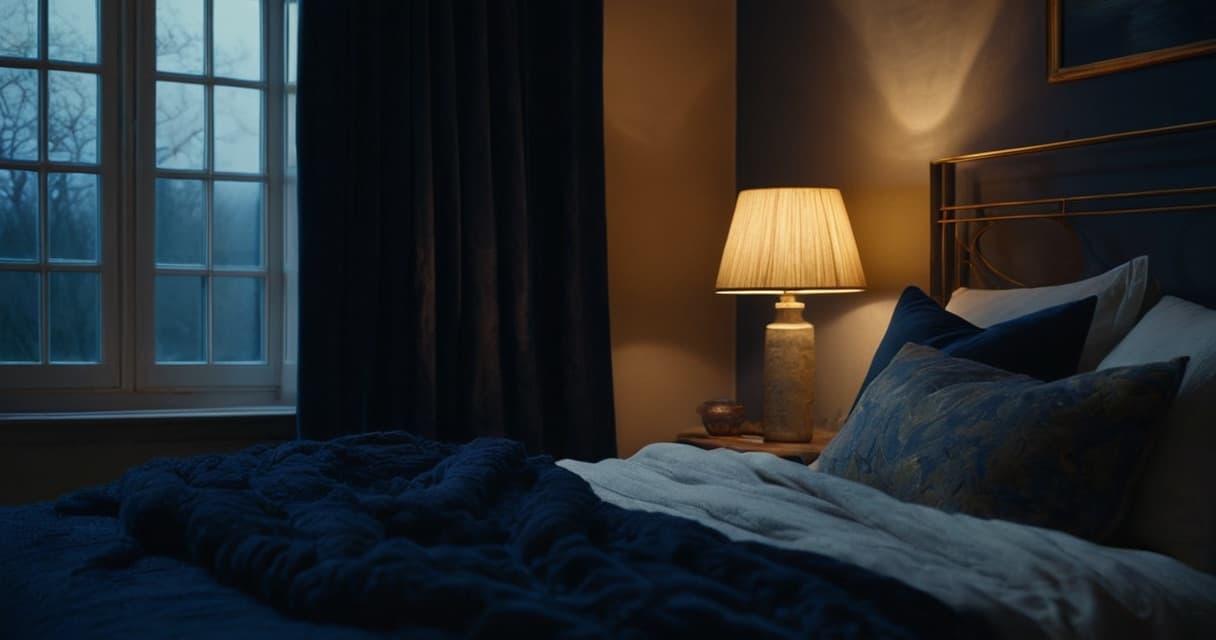
An honest promise first: there is no trick that makes sleep arrive on command, and anyone selling you a two-minute guarantee is selling. What you can do is remove the things standing between you and sleep, and give your mind somewhere soft to land. That is usually enough, and it is what this guide is about.
What “fast” actually means
Healthy sleepers typically take ten to twenty minutes to drift off. That gap even has a name, sleep latency, and it is supposed to exist. Falling asleep in under five minutes is usually a sign of sleep debt, not talent. So the goal is not zero. The goal is to stop lying awake for an hour, and to make the twenty minutes you do spend feel like descent instead of struggle.
The paradox at the heart of it
Sleep is one of the few things that runs away when chased. Effort raises arousal, arousal prevents sleep, and the harder you try the more awake you become. Researchers call this sleep effort, and it quietly powers most bad nights. Every technique below works the same way underneath: it gives your body the right conditions and your mind a gentle occupation, so that sleep can arrive while you are looking the other way.
Set the body up before you get in bed
- Cool the room. Falling asleep rides on a drop in core body temperature. Most people sleep best somewhere around 60 to 67°F (16 to 19°C). Cooler than feels strictly cozy is usually right.
- Take a warm shower or bath an hour or two before bed. It sounds backwards, but warming your skin brings blood to the surface and helps your core dump heat afterward, which deepens the natural dip.
- Move your caffeine cutoff earlier. Caffeine has a half-life of five to six hours, so a 4pm coffee is still meaningfully present at 10pm. Early afternoon is a kinder deadline.
- Be honest about alcohol. It shortens the fall but breaks the night, usually as a 3am wake-up call.
- Dim the last hour. Bright overhead light and close-held screens tell your body clock the day is still going. Low lamps, slower activities, and the same order of small rituals each night give sleep a runway to land on.
In bed: techniques that actually help
Lengthen your exhale
Breathe in through your nose for a count of four, then out slowly for six to eight. Repeat for a few minutes. A longer exhale activates the body’s braking system directly; it is one of the few levers you can pull on purpose. The popular 4-7-8 pattern is a fine variant, but comfort beats counting.
Unclench, from the face down
Do a slow pass through your body: jaw, tongue, shoulders, hands, and let each one soften as you find it. Most of us hold a surprising amount of the day in the jaw alone. This is the useful core of progressive muscle relaxation, no app required.
Shuffle your thoughts
Rumination is a train of connected thoughts; derail it with disconnected ones. Pick a letter and drift through unrelated images that start with it: bread, a barn, a bicycle leaning on a fence. This “cognitive shuffle” is scatter-brained on purpose. Sleep likes incoherence.
Try not to fall asleep
Strange but well-studied: lie comfortably in the dark, eyes gently open, and quietly intend to stay awake a little longer. Removing the performance pressure removes the arousal that came with it. This is called paradoxical intention, and it suits people who feel sleep has become a test they keep failing.
Give your attention a handrail
Silence leaves a busy mind alone with its planning. Quiet audio, a slow story, or steady rain, occupies just enough attention that worry has nowhere to sit. Keep the volume just above a whisper and use a timer that fades.
If you want a handrail tonight without going looking for one, this is eight hours of slow, real ocean waves from our free YouTube channel, mixed quiet and steady so it can simply run until morning.
About the famous “military method”
The viral version promises sleep in two minutes: relax the face, drop the shoulders, empty the mind, picture a calm scene. The honest part of the original story is usually left out: it reportedly took six weeks of nightly practice to work. Which is the real lesson. It is progressive relaxation plus imagery, and it works through repetition, not magic. Practice any wind-down consistently and it becomes a cue in itself.
If sleep still won’t come
After what feels like twenty minutes of tossing (do not check the clock), get up. Sit somewhere dim, do something calm and slightly boring, and come back only when your eyes are heavy. It feels like giving up; it is actually protecting the most valuable association you own, the one between your bed and sleep.
The long game
The fastest fallers-asleep are not technique collectors. They keep the same wake time every day, get morning light, move their bodies, and let the last hour of the evening keep a familiar shape. Do that for a few weeks and the routine itself becomes the signal. The techniques above are for the nights in between, and there will always be a few. Be patient with them, and with yourself.
Common questions
How long should it take to fall asleep?
For most healthy sleepers, ten to twenty minutes is normal. Falling asleep the moment your head touches the pillow usually means you are underslept rather than gifted. If it regularly takes much longer than thirty minutes, the techniques here can help, and if it persists for months, consider talking to a doctor about CBT-I.
Does the 4-7-8 breathing method work?
Slow breathing with a longer exhale genuinely calms the nervous system, and 4-7-8 is one comfortable way to do it. The exact counts matter less than the shape: slow, unforced breaths where the exhale is longer than the inhale. If holding your breath feels stressful, skip the hold.
Is it bad to fall asleep to audio?
No. A slow story or steady soundscape gives a busy mind something soft to rest on, and many people fall asleep faster with it than in silence. Use a sleep timer or a fade so the audio does not run all night at full volume, and keep the level low.
Why do I fall asleep fine but wake up at 3am?
Falling asleep and staying asleep are different problems. Middle-of-the-night waking is usually about lighter second-half sleep, stress, alcohol, or a warm room rather than bedtime habits. We cover it in detail in our guide to 3am waking.
If tonight is one of those nights
DreamTide is a small, sleep-first app: slow stories, gentle wind-downs, and a seamless sound mixer, narrated in soft, real voices, with timers that fade to silence once you’re asleep. 32 soundscapes and stories are free forever, no card, and Premium starts with 7 nights free.